

When an Attic Moisture Problem Looks Like a Roof Leak
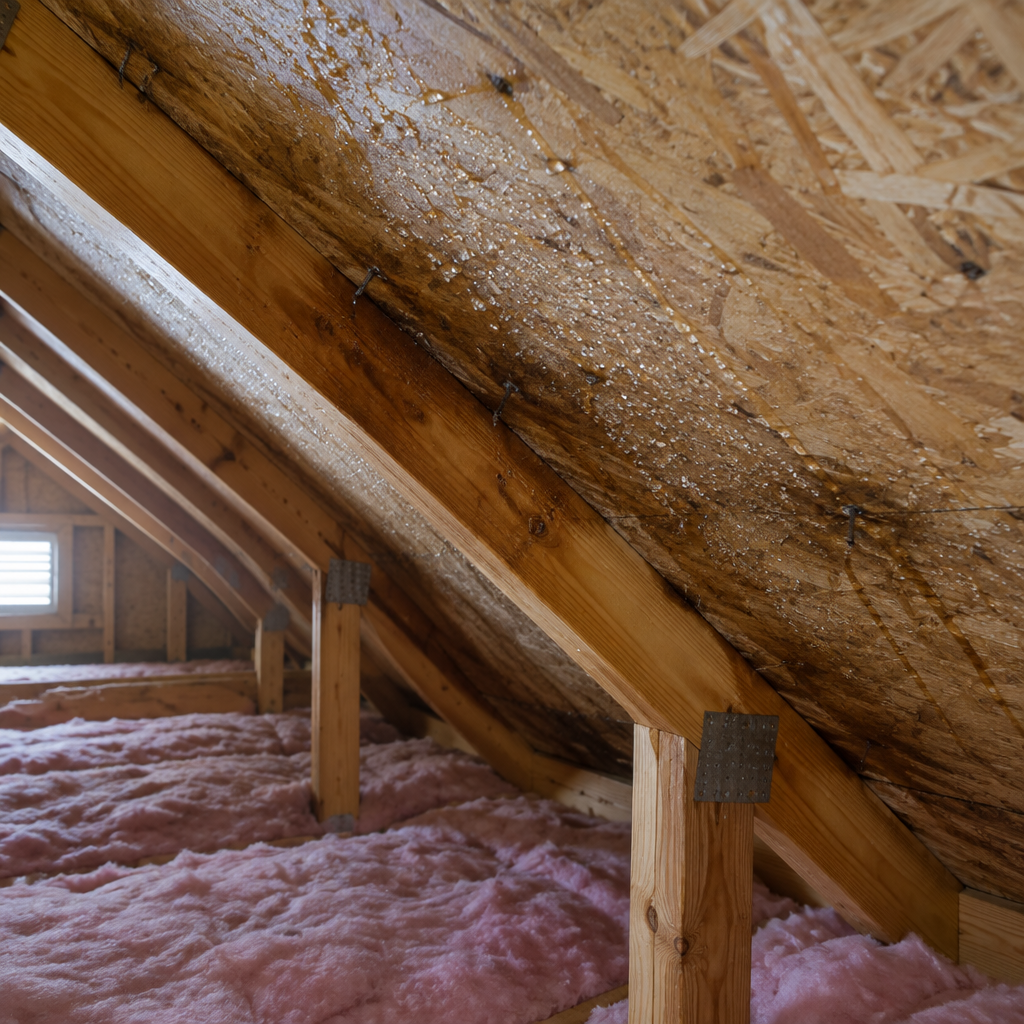
A wet roof deck on a cold morning can send a homeowner looking for an exterior leak that is not there. An attic condensation vs roof leak diagnosis starts with timing: rain, snowmelt, indoor humidity, and outdoor temperature leave different clues. Widespread frost or wet fasteners usually tells a different story from a stain that follows one flashing detail.
Read the timing of the moisture
Leaks often follow rain, wind-driven rain, or a thaw. Condensation is more likely during cold weather when indoor humidity is high. Keep a short log of weather, indoor activities, and when the staining appears.
Follow the pattern, not only the stain
A roof leak may track from flashing or a penetration before dripping far away. Condensation can appear as widespread frost, wet nail tips, or moisture across the underside of the deck rather than one entry point.
Inspect air leakage and exhaust ducts
Gaps around attic hatches, ceiling fixtures, plumbing stacks, and wall tops can carry warm air upward. Bathroom or kitchen exhaust that terminates in the attic can add a large moisture load and should be corrected.
Coordinate roofing, insulation, and ventilation
The repair may involve exterior flashing, air sealing, duct correction, insulation, or balanced ventilation. Treating only one layer can miss the route by which heat and moisture reach the deck.
Read moisture clues in the right order
Start with weather history, then inspect the attic pattern, and only then isolate likely exterior details. Rain-driven entry often creates a directional track from a penetration or wall, while condensation may affect nails and deck surfaces over a broad cold area. A moisture meter can compare suspect and control locations, but readings need material and temperature context. Check whether insulation has been moved and whether ducts are disconnected or buried. Drying the attic before final repairs also matters because old dampness can otherwise be mistaken for proof that a new exterior repair failed.
GTA conditions for this roof
Cold GTA winters make this distinction especially important in homes that have recently received new windows, insulation, or air sealing. Those upgrades can reduce natural air leakage while bathroom fans, attic hatches, and ceiling penetrations still move moisture upward. A Toronto semi and a newer Markham detached home may therefore show similar stains for very different assembly reasons.
Use an attic condensation vs roof leak evidence map
Record when the moisture appears, how widely it spreads, and whether exhaust ducts actually terminate outdoors. Pair interior observations with an exterior check of flashings, penetrations, and snow conditions. Moisture readings and dated photographs are more useful than guessing from one ceiling mark. If both air leakage and a roof defect are present, the proposal should assign the air-sealing, duct, insulation, and roofing work to the right trades in the right order.
Practical planning checklist
- Record whether moisture follows rain or cold weather.
- Confirm exhaust ducts terminate outdoors.
- Inspect the attic hatch and ceiling penetrations.
- Dry wet materials before closing the issue.
The takeaway
Water from indoor air needs a different remedy from water driven through the roof covering. Prove the route first, then dry affected materials and correct every contributing layer. MLB Roofing can help GTA owners inspect the exterior roof and coordinate the evidence needed to distinguish leakage from attic moisture.
