

Ice Dams on Older GTA Homes: Causes and Prevention
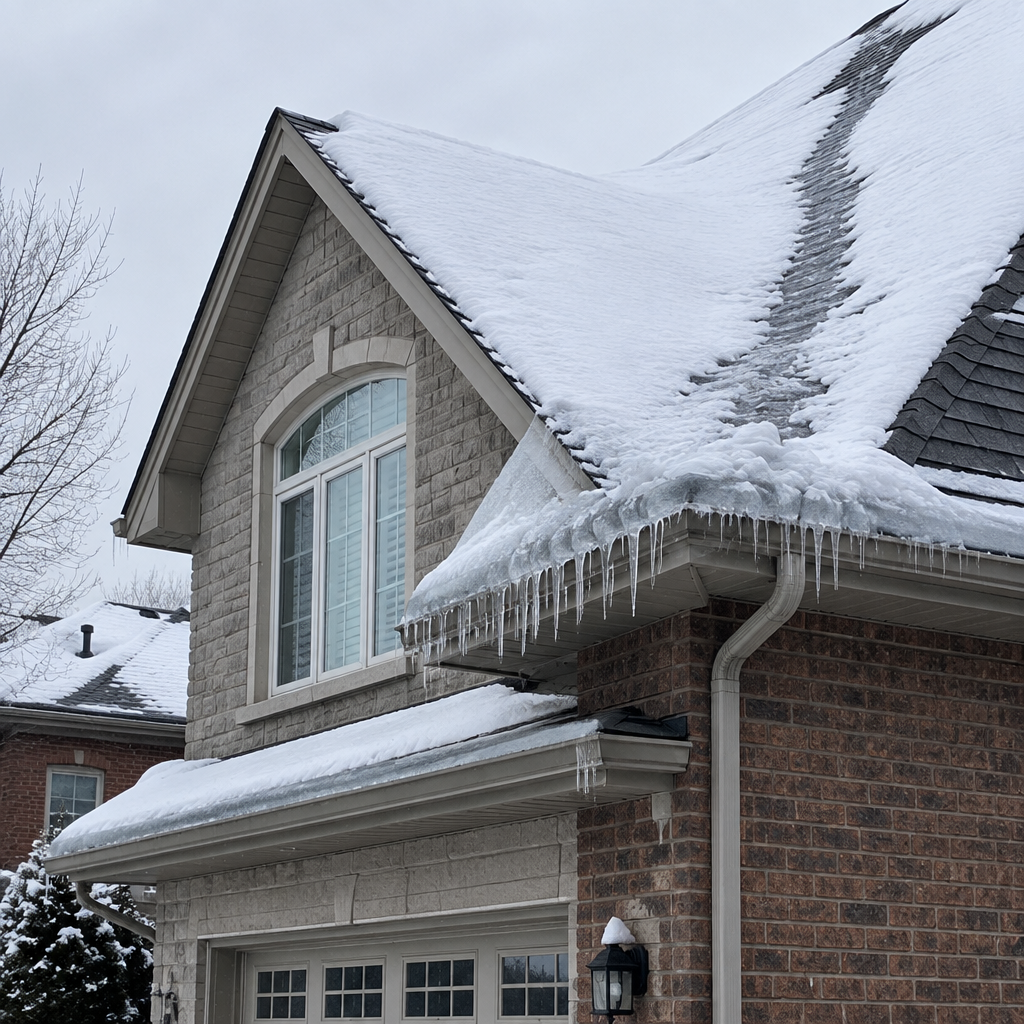
The ridge of ice at an eave is the last link in a longer chain. Ice dam prevention in the GTA begins where indoor heat and moisture escape into the attic, not with a tool on the shingles. Snow melts over a warm roof area, reaches a colder edge, and refreezes until later water has nowhere easy to drain.
Understand the heat path
Escaping heat warms part of the roof and melts snow. Water runs toward the colder eave, freezes, and can build a ridge that blocks later meltwater. The backup may move under vulnerable roof details.
Prioritize air sealing before adding insulation
More insulation helps only when warm, moist air is not bypassing it. Attic hatches, plumbing penetrations, pot lights, and wall-top gaps deserve attention before loose-fill insulation conceals them.
Keep eave ventilation routes open
Soffit intake paths can be blocked by insulation or missing baffles. Balanced intake and exhaust support a more consistent attic temperature, but ventilation is not a substitute for air sealing.
Use roof details that manage residual risk
Eave protection, sound flashing, clear gutters, and properly placed downspouts help manage water when snow melts. Heat cables are a targeted tool, not a cure for an uncontrolled heat-loss problem.
Avoid fixes that treat only the frozen edge
Chipping at an ice ridge can cut shingles and put the worker below falling ice. Adding roof vents may also disappoint if warm air continues to leak through the ceiling or intake channels are closed. The investigation should trace the warmest roof areas back to attic bypasses, thin insulation, duct routes, or complex framing. In finished attics, selective thermal imaging or carefully planned openings may help define those paths. Once the heat source is reduced, drainage details at the eaves manage the meltwater that still occurs during sun and seasonal temperature changes.
GTA conditions for this roof
Older Toronto and Mississauga homes often combine additions, knee walls, shallow eaves, and interrupted soffits. A rear extension may melt snow while the original front roof stays cold, creating a problem that a single ventilation change will not solve. GTA freeze-thaw cycles can repeat that process several times in one week.
Define ice dam prevention in the GTA as assembly work
Begin with attic access, indoor humidity, visible frost, insulation depth, and the continuity of soffit baffles. The proposal should state which air leaks will be sealed, how insulation will be protected, and where intake and exhaust air can move. It should also describe eave protection, gutter condition, and safe drainage for residual meltwater. Heat cable or snow removal may manage a specific risk, but the contractor should explain what underlying condition remains if either is proposed.
Practical planning checklist
- Photograph where ice repeatedly forms.
- Inspect air leaks before topping up insulation.
- Confirm soffit baffles remain open.
- Avoid chopping ice with tools that damage shingles.
The takeaway
Lasting prevention comes from controlling heat, air, and water as one roof-and-attic system. Do not let repeated scraping stand in for a diagnosis of the warm area above. MLB Roofing can review recurring ice at GTA roof edges and help define the roofing work that belongs beside any insulation or air-sealing improvements.
